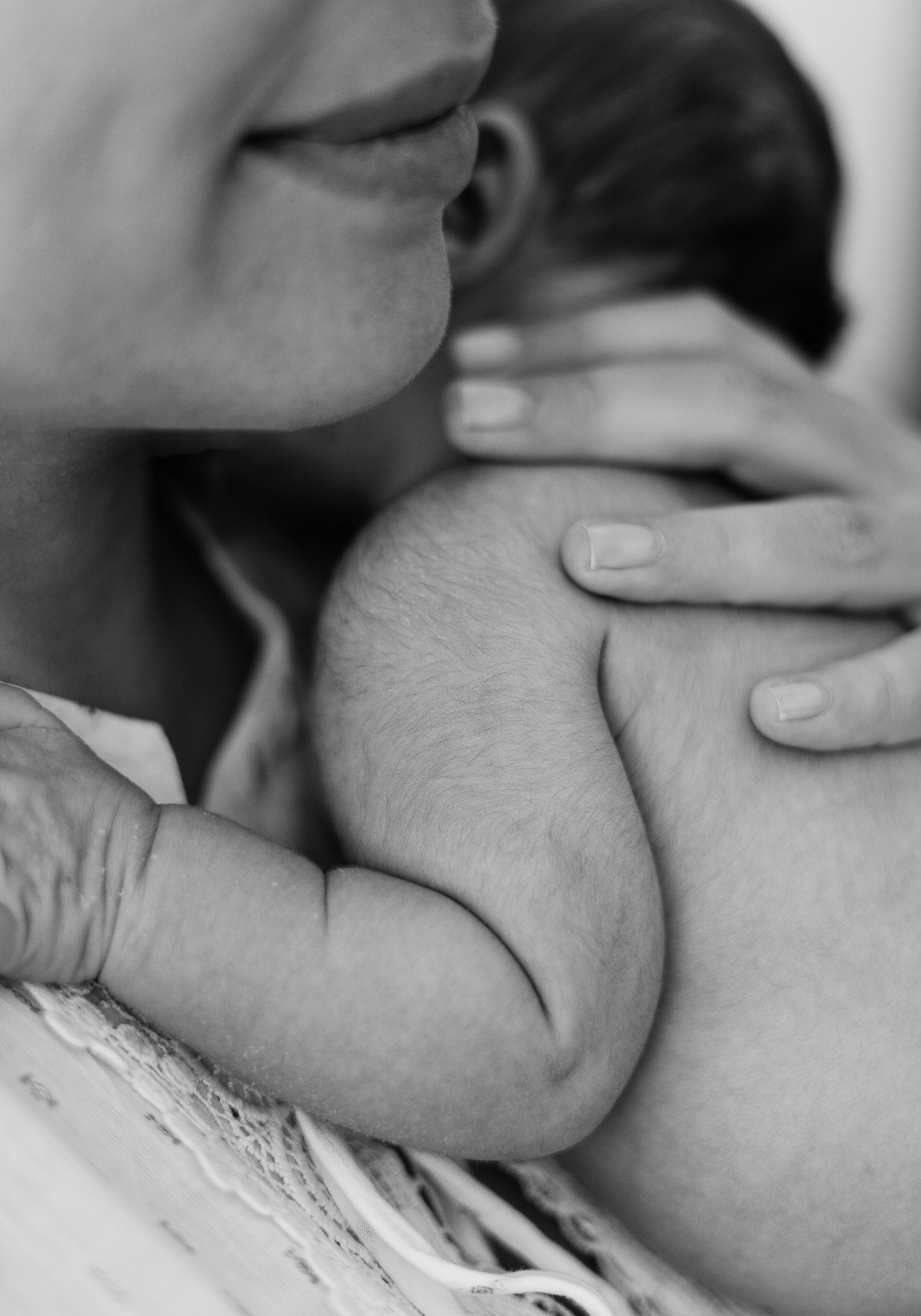
give your child's health a strong foundation from the start.
your child's health is shaped by more than genetics. from preconception through childhood, there are key windows of opportunity to positively influence development and long-term health, and we help you make the most of them.
these windows don't last forever.
during periods of rapid development, there's an
opportunity to help shape health for years to come.
1 in 3 kids.
1 in 2 young adults.
in the U.S. live with at least one chronic condition, and the numbers are climbing.
- children (3–17): ~31% have at least one chronic condition. Forrest CB et al., JAMA, 2025.
- children (5–17): more than 30% in 2017–18, up from ~23% in 1999–2000. Wisk LE et al., Academic Pediatrics (National Health Interview Survey data).
- young adults (18–34): 53.8% report at least one chronic condition. CDC, MMWR, 2022 (BRFSS 2019 data).
we can't control every outcome. but that doesn't mean we're powerless.
genetics and circumstance matter, but they're not the whole story. everyday foundations shape health too, especially during periods of rapid growth and development.
how can what happens early shape health years later?
Every cell in your child's body carries the same set of genes, the same "instruction book." But not every instruction gets used in every cell — a skin cell and a brain cell read from the same book, just different pages. That process, a gene being read and acted on, is called gene expression, and it's happening constantly, in every cell. So what decides which pages get read?
That's where epigenetics comes in. Epigenetics is how gene expression gets turned up or down without any change to the genes themselves. The body places small chemical tags along the DNA, like sticky notes and highlighter marks in the margins, flagging some pages to be read more, others less. The words never change. What changes is which ones get emphasized. And the marking up starts earlier than most people realize.
It begins before conception. Egg and sperm carry epigenetic tags of their own, shaped by nutrition, lifestyle, and environment over the months they mature. Those same months shape the health of the egg and sperm, and the environment the embryo will begin in. The marking continues from there, through pregnancy and early childhood. And gene expression isn't the only thing at work during this window.
Organs are forming. The immune system is learning what to react to. The gut microbiome is being seeded. The stress response is being calibrated. Researchers study all of this under one field, called DOHaD (Developmental Origins of Health and Disease). What ties it together is timing.
From preconception through early childhood, the body is uniquely responsive to everyday inputs — which is why this window offers so much opportunity.
so what does the research in this field actually show?
a few studies we love
that show why these windows matter. →The studies featured here are independent, published research,
not studies conducted by Parenthood Wellness. Findings reflect the populations and interventions studied and should not be interpreted as expected results or guarantees of our services.
These studies come from the broader scientific fields of DOHaD (Developmental Origins of Health and Disease), epigenetics, and child health. This is published research from the field — it is not Parenthood Wellness's own research, and it does not describe the results of any Parenthood Wellness program, product, or service. We share it to show that early-life timing has been studied seriously in a real, active, evidence-based field.
A few things to keep in mind:
- Every finding is specific to the people and intervention studied — the population, dose, and timeframe. Results are not predictions and may not apply to you, your pregnancy, or your child.
- Association is not a guarantee, and nothing here is a claim that our membership, courses, or 1:1 care will reproduce any result you see.
- We don't promise outcomes. We promise a thoughtful process — pairing current evidence with naturopathic principles, while recognizing that health is shaped by far more than any single choice.
- None of this is medical advice or a substitute for care from your own OB, midwife, pediatrician, or primary care provider, and it is not intended to diagnose, treat, cure, or prevent any disease.
we stay current with the research as it evolves. our naturopathic principles guide where we focus.
across the foundations club, our courses, and 1:1 care, we focus on the same six foundational areas.
{{w.text}}
more detail on this area is coming soon.
a level of support for everyone
there's a place for you here.
right now, i'm…
{{wy6Cur.seen}}
we can't control every outcome. but we can support a lot.
genetics and circumstance matter, but they're not the whole story. everyday foundations shape health too, especially during periods of rapid growth and development.
how can what happens early shape health years later?
it's a field of science known as the Developmental Origins of Health and Disease (DOHaD): the idea that our earliest environments can influence how our bodies develop and function long after childhood.
growing tissues can only use the nutrients available to them during critical periods of development.
nutrition, environment, stress, and other inputs can influence how genes are expressed.
early nutritional, hormonal, and metabolic signals can influence how developing systems function later.
early microbes interact with the developing immune system during a particularly formative period.
Every cell in your child's body carries the same set of genes, the same "instruction book." But not every instruction gets used in every cell — a skin cell and a brain cell read from the same book, just different pages. That process, a gene being read and acted on, is called gene expression, and it's happening constantly, in every cell. So what decides which pages get read?
That's where epigenetics comes in. Epigenetics is how gene expression gets turned up or down without any change to the genes themselves. The body places small chemical tags along the DNA, like sticky notes and highlighter marks in the margins, flagging some pages to be read more, others less. The words never change. What changes is which ones get emphasized. And the marking up starts earlier than most people realize.
It begins before conception. Egg and sperm carry epigenetic tags of their own, shaped by nutrition, lifestyle, and environment over the months they mature. Those same months shape the health of the egg and sperm, and the environment the embryo will begin in. The marking continues from there, through pregnancy and early childhood. And gene expression isn't the only thing at work during this window.
Organs are forming. The immune system is learning what to react to. The gut microbiome is being seeded. The stress response is being calibrated. Researchers study all of this under one field, called DOHaD (Developmental Origins of Health and Disease). What ties it together is timing.
From preconception through early childhood, the body is uniquely responsive to everyday inputs — which is why this window offers so much opportunity.
what does the research actually show?
a few of the studies we love that show why these windows matter. →The studies featured here are independent, published research, not studies conducted by Parenthood Wellness. Findings reflect the populations and interventions studied and should not be interpreted as expected results or guarantees of our services.
we don't promise outcomes. we promise a thoughtful process.
we stay current as the evidence evolves and pair it with time-honored naturopathic principles, while recognizing that health is shaped by much more than any one choice. because evidence should inform care, not turn it into a one-size-fits-all formula.
we stay current with the research as it evolves. our naturopathic principles guide where we focus.
everything we do, across every way of working with us, is built around six foundational areas informed by research and naturopathic principles.
{{pillar.n}}{{pillar.title}}→
{{pillar.desc}}
take our quiz →
not sure where to start? tell us where you are: